Academic Programs
Leaning about Orality using Orality
In today’s educational landscape, simply accumulating knowledge is no longer enough. What truly makes a difference in this world are transformed, authentic lives. It’s time to return to the basics—to how Jesus taught.

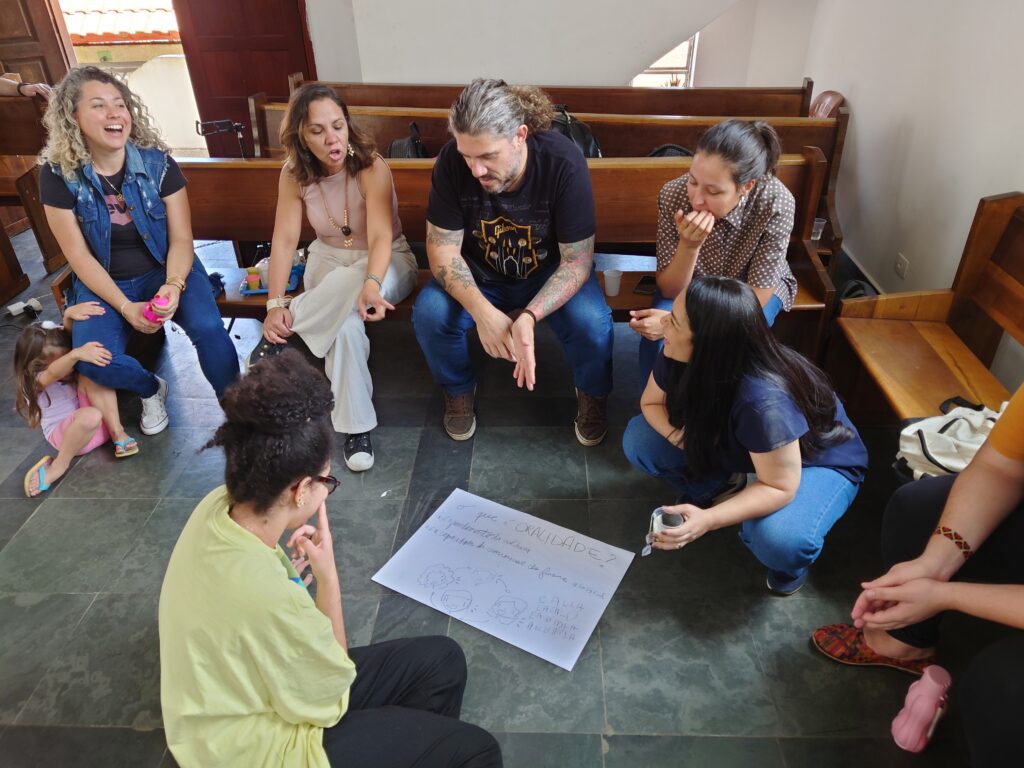
More than five decades ago, chronological storytelling began in remote areas of the world and slowly made its inroads into the academy. Today, research confirms that the methods and principles of orality connect deeply to how we are created as humans in the image of God. Accreditors around the world are taking notice, pushing for orality to be integrated into theological education.
Current Degree Programs
Graduate Diploma
A focused program of 30 units designed to give you a solid foundation in your field.
Subjects:
- Research Methods
- All 4 primary orality modules
- Elective of 4 additional orality modules
- Integrative Project
Master of Arts
A 60-unit program that deepens your knowledge and sharpens your expertise.
Subjects:
- Research Methods
- All 4 primary orality modules
- All 6 advanced orality modules
- Elective of 8 additional subjects from the Koinonia/Kairos prospectus
- Integrative Project
Master of Divinity
A comprehensive 90-unit program fully recognized by the Philippine government.
Subjects:
- Research Methods
- All 4 primary orality modules
- All 6 advanced orality modules
- Elective of 18 additional subjects from the Koinonia prospectus
- Integrative Project
Doctor of Philosophy
A research degree for those ready to push boundaries and move the field of orality forward.
Prerequisites:
- Research Methods
- All 4 primary orality modules
- Integrative Project
Subjects:
- All 6 advanced orality modules
- Elective of 2 additional subjects from the Koinonia prospectus
- Research & dissertation
We are partnering with the Koinonia Theological Seminary, Philippines, and Kairos University, USA, to provide students the opportunity to earn affordable, accredited, competency-based degrees that focus on practical application and personal transformation rather than mere knowledge acquisition.
FAQs
Why study orality?
Orality studies is a multidisciplinary track that reveals more of how we communicate as whole persons, extending far beyond merely conveying facts, concepts, and principles. God Himself employs a rich tapestry of stories, songs, prayers, love letters, visions, and more to communicate His message. The Orality Studies Program facilitates this by opening those channels and unlocking doors, allowing you to deliver messages using your audience’s preferred ways and means of communication rather than ours.

What gaps is this program addressing?
This program bridges the gaps between modern theological education and the excluded majority, ensuring impactful communication.
Modern theological education tends to work on several assumptions: we simply need to tell people the truth. Inform them that the Word of God is, for all practical purposes, a text; only reading and studying the text can take us to real maturity. It also tends to presume that Western perspectives offer the most profound insights into the mind of God for faith, church, and witness, and that the Dominant Minority must lead the excluded majority of the world into ecclesiological progress.
However, these assumptions rarely account for the following gaps and divide: The Enlightenment Gap: The Gutenberg Parenthesis to the Digitoral Age; The Digitoral Gap: A new generation that can read but prefers multimodal communication; The Digital Divide: digital natives, affluent, and impoverished.
Hence, the Orality Studies Program aims to bridge these gaps, facilitating relevant and meaningful communication with the Excluded Majority, which includes a significant portion of the remaining Unreached People Groups (UPG). By addressing these disparities, OSP seeks to ensure that the messages it conveys have greater impact.
What is competency-based theological education?
Demonstrated Knowledge
Competency-based theological education (CBTE) focuses on what you can do with what you learn, not just how long you sit in a classroom. Rather than measuring progress by credit hours alone, CBTE evaluates whether students have mastered the knowledge, skills, and character needed for effective ministry.
Assessment
Progress is assessed through demonstrated competencies, ministry reflection, mentoring, and real-world application. Students advance when they can show they have truly grasped and can apply what they have learned, making the education deeply personal, practical, and ministry-focused.
What are the subjects?
All our training starts with four primary modules, which also form the content of the professional certification program.
Primary Modules (Certification Program)
- Foundations: Theology, theory, and practices & multidisciplinary facilitating Foundations of Orality.
- Narrative: Narratology and models of Scripture engagement, facilitating the narrative processes & narrative performance.
- Culture & Arts: Building a culture of arts in context & leading an arts workshop.
- Instructional Design: Teaching for transformation & curriculum and instructional design systems.
A real-time project where students demonstrate the ability to apply all they learned to their ministry.
In addition, the academic programs also include our advanced subjects.
Biblical Theology
- Orality and the Old Testament.
- Orality in the New Testament & Early Church.
- Character Theology & Integrated Hermeneutics.
Practical Theology
Most degrees require additional coursework beyond our core program. These courses are offered through our partner schools and are flexibly assigned based on your individual needs.
How much does it cost?
Tuition
You can find the cost of our professional certification program on its information page.
Since academic program pricing varies by school, we’ve listed the details for each MA program directly on our partners page.
Assistance
We’re also committed to making our program accessible to all deserving students, regardless of financial circumstances. Further assistance is available for qualified students.
How long does it take?
In short, it depends.
Typically, a full-time student takes 1 year to complete the graduate diploma, 2 years for the master of arts, 3 years for the master of divinity, and 3-4 years to graduate with a doctorate.
It varies from student to student and depends on the amount of time put into the program.
What about working students?
Since our programs aim for practical application and transformation, these are our favorite students. Pastors and cross-cultural workers can directly apply the content to their ministry, making it a part of their learning experience and integrating learning into the work they already do.
How can I apply & enroll?
With a variety of training options, academic programs, and partner schools to choose from, we want to make sure you get the right information.
Simply fill in the form below, select the programs you’re interested in, and leave us your questions. We’ll get back to you with everything you need to know.
You can also contact us directly at